When it comes to nonfiction in particular, the book, positioning and messaging have to focus on the core benefits of the book. Avid nonfiction readers know instantly if the book is going to help fix whatever they’re trying to solve, learn a new skill, or – in many cases – just be inspired. The case study outlined here shows we helped a nonfiction author clarify their authority positioning, strengthen the connection between their book and professional platform, and create a smarter visibility strategy. The campaign focused on reader targeting, author messaging, media angles, podcast opportunities, website alignment, and long-term discoverability without relying on book-sales claims. And let’s start by talking about why this matters. Nonfiction leans heavily on the author’s expertise, readers want to know why you’re the best person to give them the information they need. And that’s a major piece of what this campaign focused on.
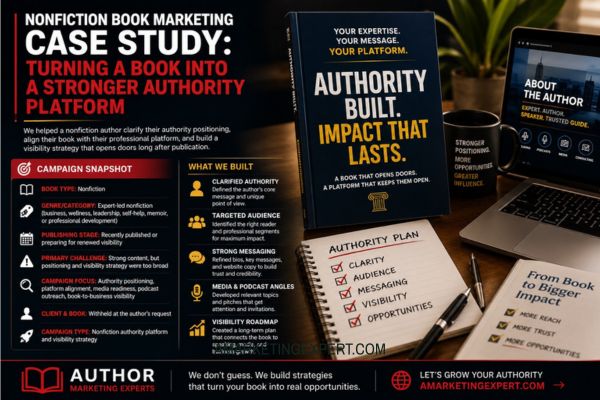
Campaign Snapshot
Book type: Nonfiction
Genre/category: Expert-led nonfiction / business, wellness, leadership, self-help, memoir, or professional development
Publishing stage: Recently published or preparing for renewed visibility
Primary challenge: The book had strong content, but the author’s positioning and visibility strategy were too broad
Campaign focus: Author authority, platform alignment, media readiness, podcast outreach, book-to-business visibility
Client identity: Withheld at the author’s request
Book title: Withheld at the author’s request
Campaign type: Nonfiction authority platform and visibility strategy
The Book Marketing Challenge
This author came to AME with a nonfiction book that had real substance behind it.
The topic was timely. The author had meaningful experience. The book was connected to work they were already doing in the world, whether that was consulting, coaching, speaking, teaching, business-building, advocacy, wellness, leadership, or thought leadership.
But the positioning was not yet sharp enough. The author wasn’t leading with the benefits and this is something we see often with nonfiction authors.
They have a good book. They have expertise. They have a message that matters. But the marketing language is too broad, the audience is too general, and the book is being treated like a standalone product instead of part of a larger authority platform.
That distinction matters.
For many nonfiction authors, the book is not just the product but it’s also a credibility asset. A book can support speaking, media, consulting, coaching, workshops, partnerships, professional opportunities, audience growth, and long-term visibility.
But only if the strategy connects those pieces in a way that makes sense to the reader.
In this campaign, the author did not need more random promotion. They needed a clearer authority position and a stronger bridge between the book, the author’s expertise, and the audience most likely to care.
What AME Found
When we reviewed the author’s book, website, retail page, bio, messaging, and existing platform, we found that the core message was strong but not yet focused enough for visibility.
The author was trying to speak to too many people at once and this is a common nonfiction problem. Authors don’t want to narrow the audience, thinking that this will limit the book. For example you have a business book and you want to get it out to all business owners. But are these business owners startups? Is this for a large or small company? What’s the average revenue? Specifics matter, though less appealing than: this book is for everyone who owns a business or wants to lose weight or be a better parent or whatever.
When the positioning is too broad, it becomes harder for readers, media, podcast hosts, event organizers, and potential partners to quickly understand why the book matters and who it is for. The book had a lot of useful ideas, but the campaign needed to crystalize those ideas for the reader as well as refining the reader promise on the Amazon page and create a pitch that supported all of that.
We also found that the author’s bio and platform language did not fully support the book’s authority. The credentials were there as was the experience and the message but the pieces were not yet working together as a cohesive visibility system.
The author needed to be positioned not just as someone who wrote a book, but as someone with a clear point of view, a defined audience, and something valuable to contribute to a specific conversation.
That became the foundation of the campaign.
The Strategy
Our strategy was to turn the book into a stronger platform asset but also to help drive more reader discovery.
That meant focusing on five core areas:
- Clarifying the author’s authority position
- Defining the primary audience segments
- Strengthening the author bio and public-facing messaging
- Developing media, podcast, and thought-leadership angles and building a focused pitch list
- Creating a long-term visibility plan that connected the book to the author’s broader goals
The goal was not to make the author sound bigger, louder, or more generic.
The goal was to make the author easier to understand, easier to trust, and easier to invite into relevant conversations.
For nonfiction authors, this is often where the real opportunity lives.
Campaign Components
1. Authority Positioning
We began by clarifying the author’s core authority position which is something a lot of book marketing campaigns overlook. And this is different from simply identifying the topic of the book.
A book topic might be leadership, wellness, business, personal growth, trauma, parenting, creativity, aging, spirituality, career reinvention, or entrepreneurship.
But an author’s authority position answers a more specific question:
Why should this author be part of this conversation? That question not only shaped the campaign but also shapes all buying decisions.
We looked at the author’s experience, credentials, personal story, professional background, target audience, core message, and the transformation the book offered readers.
Then we worked to sharpen the positioning so the author could be introduced more clearly across the website, Amazon page, media materials, podcast pitches, social content, speaking opportunities, and future visibility efforts.
2. Audience Segmentation
Next, we identified the specific audience groups most likely to respond to the book.
This step is especially important for nonfiction because one book can often speak to multiple audiences. So for example, a leadership book may appeal to executives, entrepreneurs, HR professionals, team managers, and speakers. A wellness book may appeal to consumers, practitioners, caregivers, organizations, and podcast audiences. A memoir may appeal to readers of personal transformation, but also to communities connected to the book’s themes. So the challenge for nonfiction is not just identifying possible audiences, it’s also prioritizing them.
Just about every nonfiction book has a core audience- also and often referred to as “low hanging fruit” but these books also often have additional readers who are equally valuable but may not be our first targets for pitching. So the goal is to prioritize these readers correctly.
For this campaign, we created a campaign that fit the core audience, with an option to reach out more broadly once the initial work was done. This work allowed the campaign to focus on the readers, platforms, media contacts, podcasts, organizations, and other visibility opportunities that most aligned with the author’s actual goals.
3. Author/Book Messaging and Bio Development
The author’s bio needed to do more than list credentials. Because a strong and well-developed nonfiction author bio should create trust quickly. It should help readers and media contacts understand why the author is qualified to write the book, what perspective they bring, and why their message matters now. It’s also about separating the book from the hundreds of thousands of similar books out there hitting the market.
The positioning language both in the messaging of the book (so what the book is about and who it is for) as well as the author’s messaging was refined and narrowly focused so it could be used in a variety of ways, namely:
Amazon author bio
Website bio
Media kit
Podcast pitch
Speaker pitching
Pitch materials to media, influencers, podcasts and others
The goal was consistency.
When an author’s Amazon page says one thing, their website says another, and their media pitch says something else, the campaign feels fragmented. When all of those pieces reinforce the same authority position, the author becomes easier to understand and easier to recommend.
4. Media and Podcast Angle Development
A common mistake nonfiction authors make is assuming that “I wrote a book about this topic” is enough of a media angle when it actually is not.
Media contacts and podcast hosts need a reason to care and it also has to matter to their audience. They need a conversation, an angle that’s fresh, relevant and insightful – not just a book announcement.
For this campaign, we developed several pitch angles that connected the author’s expertise to timely, relevant, audience driven topics that we knew the individual we were pitching would care about – because they knew their audience would care about them as well.
Those angles were designed to support:
Podcast outreach
Guest article opportunities
Media pitching
Speaking topics
Newsletter content
Social content
Partnership conversations
Long-term thought-leadership visibility
This allowed the author to show up with more than a book. This allowed them to show up with ideas, insights, stories, frameworks, and useful conversations tailored to the audiences they wanted to reach.
5. Platform Alignment
We also reviewed how well the book connected to the author’s existing platform.
For nonfiction authors, the platform often includes the website, blog, podcast appearances, LinkedIn profile, speaker page, services page, newsletter, media kit, lead magnet, and professional offers.
In this case, the author had several pieces in place, but they were not yet fully aligned.
We looked at where the book should sit on the website, how the author’s services or speaking topics could connect back to the book, whether the newsletter path made sense, and how the book could support future visibility beyond the initial campaign window.
The goal was to make sure visibility did not end when the campaign ended.
A strong nonfiction book should keep working for the author.
What Changed
Before the Campaign
Before the campaign, the author had a credible book and meaningful expertise, but the public-facing message was too broad.
The book was being promoted primarily as a book, not as part of a larger authority platform. The author’s bio, website, media angles, and outreach language were not yet fully aligned around a clear audience and point of view.
There were opportunities for visibility, but the campaign needed stronger positioning before outreach could be as effective as possible.
After the Campaign
After the campaign, the author had a clearer authority position and a stronger foundation for long-term visibility. The messaging became more specific which allowed us to create a focused pitch that resonated with their target market. As well, the audience targeting became more intentional. The media and podcast angles gave the author more relevant ways to enter conversations. The book was more clearly connected to the author’s broader work, platform, and goals.
Most importantly, the author was no longer simply saying, “I wrote a book.”
They were positioned to say, “Here is the conversation I belong in, here is the audience I serve, and here is why this message matters.”
That is a much stronger foundation for nonfiction book marketing.
Campaign Outcomes and Progress Markers
The outcome of this campaign was a strong improvement in the author’s visibility foundation, positioning, and long-term platform strength. This positioning now allowed us to refine the pitch list, capture more media, more influencers, and more readers. There was a clearer authority position for the author which allowed them to capture more readers and more consulting and speaking opportunities which had always been their long-term goal.
What This Campaign Demonstrates
This campaign is a strong example of why nonfiction book marketing has to go beyond “promote the book.”
For many nonfiction authors, the real opportunity is not just book visibility. It is authority visibility and leveraging what the book can do for them long-term. Your book is your business card is often something that nonfiction authors lean into and this campaign helped accomplish that.
The book can help the author become more discoverable, more credible, and more relevant to the audiences they want to reach. But that only happens when the campaign connects the book to the author’s expertise, platform, message, and long-term goals.
A nonfiction book should always answer more than, “What is this book about?”
It should also answer:
Who does this author help?
What conversation does this author belong in?
Why is this author credible?
What audience needs this message?
What opportunities should this book help create?
How does the book support the author’s larger platform?
When those answers are clear, the marketing becomes much stronger.
What Other Nonfiction Authors Can Learn From This
If you are a nonfiction author, expert, consultant, speaker, coach, business owner, or thought leader, your book should not sit off to the side of your platform. Rather, it should support it.
Before you invest in publicity, podcast outreach, ads, or a launch campaign, ask yourself:
Is my author positioning clear?
Can someone quickly understand why I wrote this book?
Does my bio support my credibility?
Is my website aligned with the book?
Do I know which audience matters most?
Do I have strong media and podcast angles?
Does my book connect to my speaking, consulting, coaching, business, or professional goals?
Am I marketing a book, or am I building an authority platform?
That last question is the big one.
Because for serious nonfiction authors, the book is often just the beginning.
Is This Similar to Your Situation?
This kind of campaign may be a fit if:
You are a nonfiction author with professional expertise
You want to reach more media, influencers, and podcasts but haven’t had much success so far
Your book supports your business, speaking, coaching, consulting, or thought leadership
You are not sure how to connect the book to your larger platform
Your message feels too broad
You want more podcast, media, speaking, or partnership opportunities
You are preparing for a launch, relaunch, or renewed visibility push
You want your book to create long-term opportunities beyond book sales
This is not about turning every nonfiction author into a celebrity expert.
It is about helping the right audience understand why your message matters and why you are the person to deliver it.
Frequently Asked Questions
What is an author authority platform?
An author authority platform is the public-facing ecosystem that supports your credibility and visibility. It may include your book, website, author bio, speaker page, newsletter, media kit, podcast appearances, articles, social profiles, services, and professional reputation.
For nonfiction authors, the platform often matters because the book is connected to a larger message, mission, business, or area of expertise.
How is nonfiction book marketing different from fiction book marketing?
Fiction marketing usually focuses heavily on reader experience, genre expectations, tropes, emotional promise, comparable authors, reviews, and retail discoverability.
Nonfiction marketing often has an additional layer: authority. The campaign may need to position the author as an expert, speaker, teacher, consultant, advocate, professional, or thought leader. That means the author’s bio, website, media angles, and platform alignment often matter just as much as the book page itself.
Do nonfiction authors need media and podcast angles?
In most cases, yes. A nonfiction author needs more than a book announcement. Podcast hosts, media contacts, event organizers, and partners need a clear reason to feature the author.
Strong angles connect the book’s message to timely conversations, audience problems, personal stories, professional expertise, or useful takeaways.
Can a nonfiction book help grow a business or professional platform?
It can, but only if the book is integrated into the author’s broader visibility strategy. The book should be connected to the author’s website, speaking topics, services, newsletter, media presence, and professional positioning.
A book by itself does not automatically create authority. But a well-positioned book can strengthen authority that is already being built.
Does AME guarantee media coverage, speaking opportunities, or book sales?
No. AME does not guarantee media coverage, speaking opportunities, book sales, bestseller status, reviews, or specific commercial outcomes. Responsible book marketing can improve positioning, visibility strategy, media readiness, and platform alignment, but results are influenced by many factors outside the control of any marketing agency.
Why are the author name and book title not included?
Some authors prefer to keep the internal details of their marketing campaigns private. To respect client confidentiality, we may withhold the author’s name, book title, and certain identifying details. The campaign strategy, challenges, and outcomes described here are based on real client work.
Check Out All of Our Book Marketing Case Studies
Local Book Marketing Case Study: Turning a Book Into a Local Visibility Opportunity
Amazon Book Optimization Case Study: Retail Pages for Authors
Pre-Publication Book Marketing Case Study: Launch Readiness
Book Influencer Outreach Case Study: Finding Better-Fit Reviewers Instead of Chasing Bigger Accounts
Book Marketing Strategy Case Study: Campaign Pivot & Readiness
Book Publicity Case Study: Media Angles & Author Visibility
Book Relaunch Case Study: Renewed Visibility Strategy for Authors
Fiction Book Marketing Case Study: Amazon & Retail Optimization
Ready to Build More Authority Around Your Book?
If you are a nonfiction author, your book may be more than something you want to sell.
It may be one of the strongest credibility tools in your platform.
Author Marketing Experts helps serious nonfiction authors clarify their message, strengthen their positioning, improve their visibility strategy, and connect their book to bigger opportunities.
If you are ready to stop treating your book like a standalone product and start using it as part of a smarter authority platform, apply for a book marketing strategy consultation.
If you’re ready for a more personalized discussion about your book and your goals, contact Author Marketing Experts. We’d be happy to learn more about your book and help you determine which marketing strategies make the most sense for your publishing goals.
0 Comments