
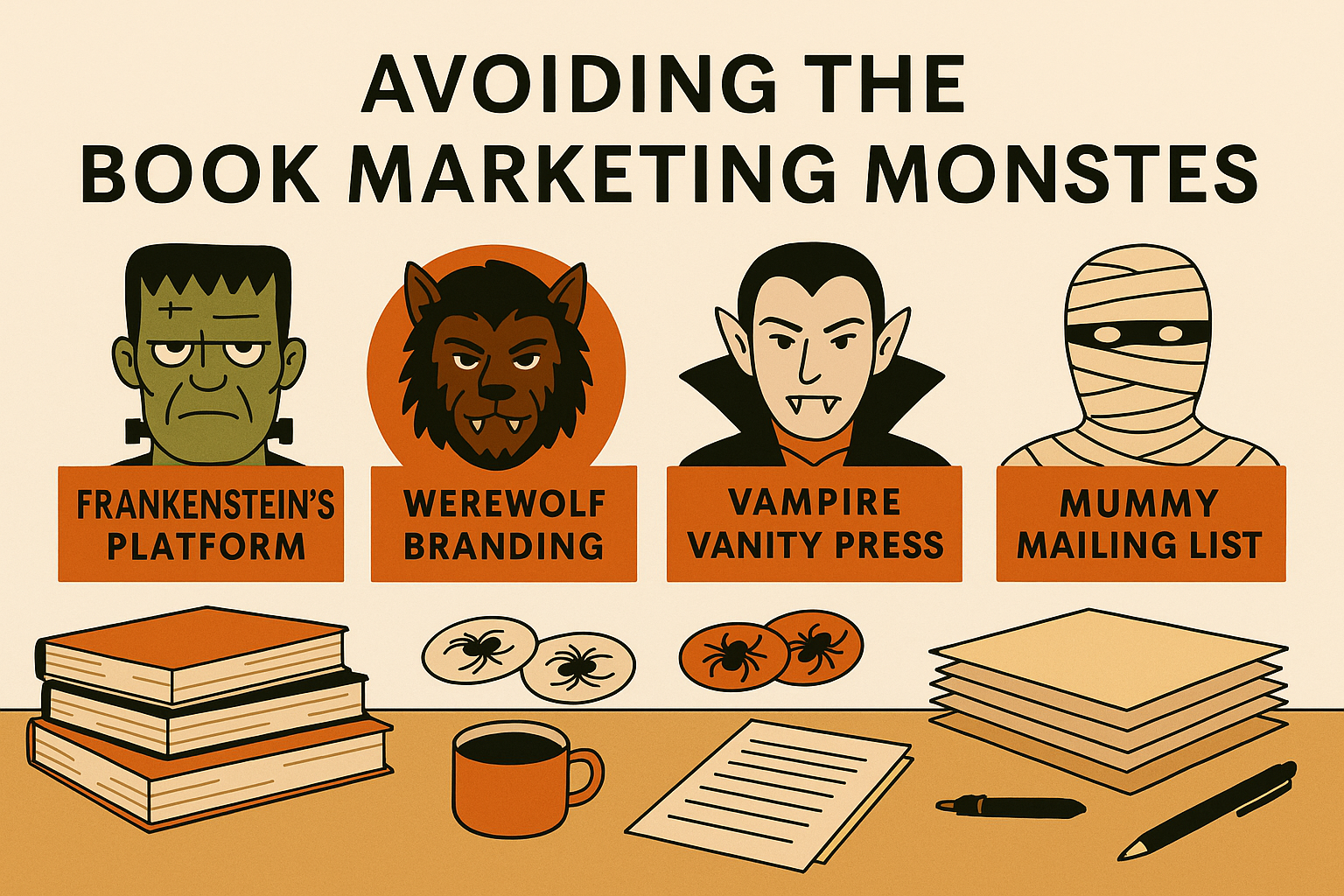
- What are common book marketing mistakes? Fragmented platform, off-brand visuals, bad contracts, cold list, untargeted ads.
- How do I avoid them? Audit channels, align branding, keep dashboard control, email monthly, focus on 1–2 platforms, measure inputs.
Even outside the Halloween season, book marketing mistakes can creep up like ghosts—draining your time, money, and confidence. The myths may change, but the monsters remain: scattered platforms, inconsistent branding, predatory publishing contracts, and silent mailing lists that turn cold.
This episode turns those spooky metaphors into evergreen strategies for author success. Because while pumpkins fade and cobwebs get packed away, good marketing habits never die.
1. Frankenstein’s Platform: When “Doing Everything” Goes Wrong
It’s easy to fall into the “Frankenstein’s platform” trap—stitching together TikTok experiments, random Amazon ads, and half-finished blogs just to feel productive. The result? A mismatched, shuffling brand that confuses readers and drains your creative energy.
According to Written Word Media, 61% of indie authors say “lack of focus” is their biggest marketing challenge. The cure is a strategic audit:
-
Identify where your readers actually spend time.
-
Pick two or three manageable channels.
-
Track what you do and why.
Every post, pitch, and page becomes your professional résumé. If it doesn’t reinforce your core promise to readers, it’s just spare parts.
? Pro Tip: Authors who track marketing activity weekly see 35% higher engagement within three months compared to those who promote sporadically (Reedsy 2024).
2. The Werewolf Brand: Consistency Before the Full Moon
By day, everything looks fine—a decent website, an attractive cover, a few solid posts. But under the “launch full moon,” your brand transforms into a confusing creature: covers that clash, messaging that misleads, and tone that doesn’t match your genre.
The fix is proactive brand testing:
-
Share early cover comps with readers.
-
A/B test taglines with your email list.
-
Align colors, fonts, and tone across your website, newsletter, and social channels.
Consistency builds credibility. A Lucidpress study found that consistent branding increases revenue by up to 23%—proof that harmony sells more books than hype.
3. The Vampire Press: Spot and Stop Predatory Publishing
The scariest villain in publishing isn’t a bad review—it’s the vampire vanity press that feeds on your ambition. These companies promise exposure, distribution, and creative freedom, but often drain your rights, data access, and long-term flexibility.
Protect yourself by asking for everything in writing:
-
Who controls your retailer dashboards?
-
How are metadata updates handled?
-
What’s the contract term and exit clause?
-
Can you contact other authors who’ve worked with them?
If a service gets defensive when you ask questions, that’s your cue to walk away. Author Rights Watch reports that authors lose an average of $4,200 when trapped in bad contracts—money and momentum that could have fueled their next launch.
4. The Mummy Mailing List: Don’t Let It Go Cold
You’ve built a list… and then gone silent. The result is a wrapped-up, lifeless “mummy” mailing list—unopened emails, unsubscribes, and fading trust.
Email still delivers the highest ROI of any marketing channel (HubSpot 2024)—an average of $36 for every $1 spent—but only if it stays active.
You don’t need to send weekly newsletters. A single monthly email with value keeps your readers engaged:
-
Share behind-the-scenes stories or research nuggets.
-
Offer sneak peeks at your next project.
-
Recommend books your audience will love.
Small lists aren’t a weakness; they’re a superpower. Treat subscribers like VIPs, and they’ll champion your books organically.
5. The Mini Monsters: Small Fixes With Big Impact
Each “mini monster” teaches a quick, lasting lesson for authors:
-
The Invisible Author: Not showing up online means no discoverability. Be present on one or two key platforms and post consistently.
-
The Headless Ad Spend: Don’t run ads without targeting. Know your comp titles, categories, and reader intent before hitting “publish.”
-
The Spider Web of Social: Being everywhere poorly spreads you thin. Focus where your readers engage most and tailor content to the platform’s culture.
-
The Troll Under the Bridge: Negative reviews happen. Separate taste from technical critique—fix what’s fixable and move on.
? Remember: In publishing, silence is scarier than criticism. Visibility breeds opportunity; consistency builds trust.
6. Turning Monsters Into Momentum
The real moral of this story isn’t seasonal—it’s structural. Evolve with intention.
-
Audit your platform.
-
Align your branding.
-
Protect your rights.
-
Nurture your list.
When every touchpoint—social, email, website, and product—supports the same reader promise, you cut waste, build credibility, and make discovery easier for the right audience.
Whether it’s October or March, these lessons stay evergreen: the best marketing isn’t magic—it’s method.
Resources & Free Downloads
Holiday book marketing: why summer prep matters
Pitching book influencers: what authors need to know
Amazon ad problems: how genre mismatching can harm sales
Marketing versus sales: what authors need to know
Media coverage: what all authors need to understand
Game-changing Goodreads news that will affect sales
How email newsletters can amplify your success
Check out all the episodes of our book promotion podcast anywhere you listen to podcasts!
Be sure to sign up for our newsletter on the right-hand side of our blog homepage. If you haven’t opened a recent one your registration may have lapsed.
Follow us on Instagram for book marketing tips and some much-needed levity.

0 Comments